



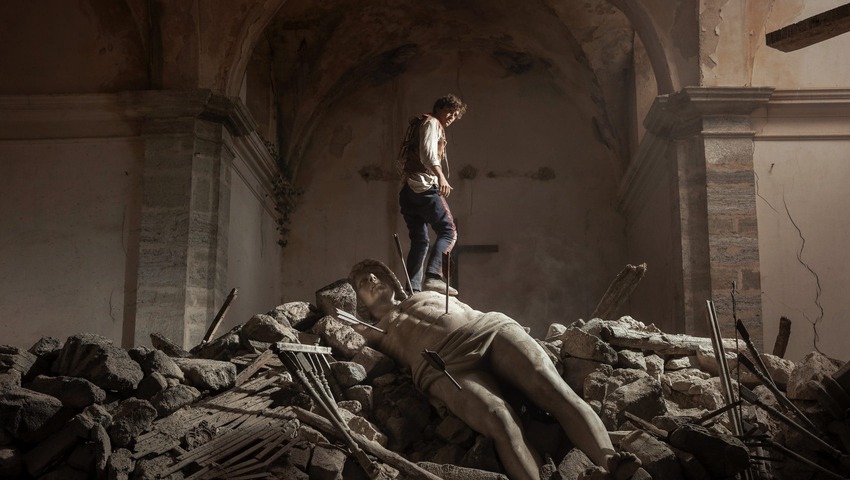
‘La bola negra’: Spanish cinema, Lorca and the stories left untold
 16/10/2026
 By
Adrián Lago
If you’ve recently heard people talking about ‘La bola negra’, you may have wondered what it is about and why it is attracting so much attention. In this article, we invite you to discover the creative universe of Los Javis, the film’s directors, and explore the life and work of one of the most important writers in Spanish literature: Federico García Lorca.
A journey through cinema, literature and Spanish culture.
Would you like to uncover all the secrets of ‘La bola negra’ (without any spoilers) and, along the way, practise your Spanish? Keep reading!
Meet Los Javis
Behind ‘La bola negra’ are Javier Ambrossi and Javier Calvo, popularly known as Los Javis. Over the past few years, these two creative talents have become one of the most recognisable artistic duos in Spanish culture.
Their journey began with a small theatre production called ‘La llamada’ (The Call), which was performed in the foyer of a Madrid theatre during the interval of another show. What started as a modest, almost experimental production gradually gained popularity until it became a fully-fledged theatrical phenomenon. Its success was such that, a few years later, they made the leap to the big screen with the film adaptation of the play (although with a different title in English).
However, it was in 2016 that Los Javis really won over audiences thanks to ‘Paquita Salas’, a television series that originally started as a project between friends. The series, which combines the mockumentary format with comedy, revolves around Paquita, a talent agent struggling to adapt to the changing entertainment industry. With its hilarious dialogue and very distinctive sense of humour, ‘Paquita Salas’ eventually became a cult series for an entire generation (which we have already recommended in another blog post). It has also given us an endless source of memes and expressions that have become part of Spanish popular culture.
Other projects followed, further establishing their reputation: ‘Veneno’, a series telling the story of a transgender woman who became hugely popular on Spanish television during the 1990s, and ‘La Mesías’, an unsettling family drama exploring religion, fanaticism and childhood trauma.
With ‘La bola negra’, Los Javis are taking another step forward in their careers. This is a particularly ambitious project that expands their creative universe and tackles themes of great historical, social and emotional depth.

Los Javis – Movistar Plus
‘La bola negra’ and its main characters
One of the most interesting aspects of ‘La bola negra’ is its narrative structure. The film tells three stories, each featuring a gay man living in a different period of history.
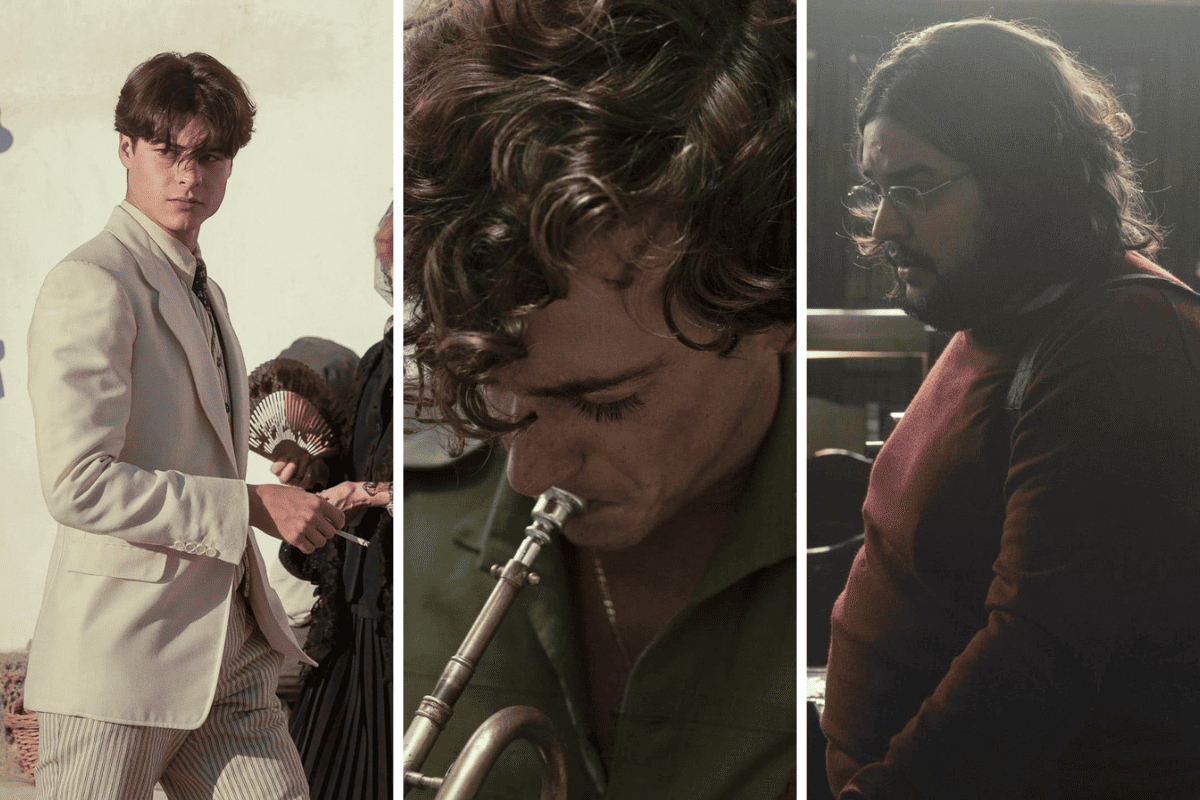
Milo Quifes, Guitarricadelafuente and Carlos González in ‘La bola negra’ – Movistar Plus
Carlos (1932) – Played by Milo Quifes. He is a young man from Granada who wants to be accepted into the Granada Casino, an exclusive club reserved for certain sections of society. However, his application is rejected in a vote in which he receives the dreaded black ball. The reason? His homosexuality.
Through Carlos’s character, the film takes us into a conservative society in which sexual orientation could become grounds for exclusion and social condemnation.
Sebastián (1937) – Played by Guitarricadelafuente. The second story takes us back to the Spanish Civil War, where a young man is forced to enlist in the Nationalist army and look after another soldier who has been wounded while fighting for the opposing side.
In a country divided by war, fear and violence, the two characters develop a connection that lies at the heart of the film.
Alberto (2017) – Played by Carlos González. A young historian uncovers a family secret that leads him to discover his own past. Here, memory, silence and the way the past can influence and shape who we are today take centre stage.
Three stories gradually intertwine, bringing into focus everything that was never told or was left forgotten.
Lorca, the origins
Federico García Lorca was one of the most outstanding writers in 20th-century Spanish literature. He was born in 1898 in a small village in Granada province and, from a very young age, showed a keen interest in art, music and literature.
As a young man, he moved to Madrid, where he met other figures who would go on to play a key role in the world of culture, such as Dalí and Buñuel. He soon became one of the leading writers of the so-called Generation of ’27.
In 1929, he travelled to New York, where he discovered a society completely different from Spanish society. During this trip, he wrote ‘Poeta en Nueva York’. After returning to Spain, he focused on his career as a playwright, writing works such as ‘Bodas de sangre’, ‘Yerma’ and ‘La casa de Bernarda Alba’. He also helped establish La Barraca, a university theatre group that travelled around the country performing a wide range of plays.
In 1936, he began writing a play in which, for the first time, the main character was openly gay. Its title: ‘La bola negra’. He only managed to write four pages, containing a list of all the characters and the opening scene. Just a month after the outbreak of the Spanish Civil War, Lorca was murdered by Franco’s rebel forces. The play was left unfinished.
In this way, the film not only pays tribute to Lorca but also imagines the stories that might have existed behind those pages he never got the chance to write.
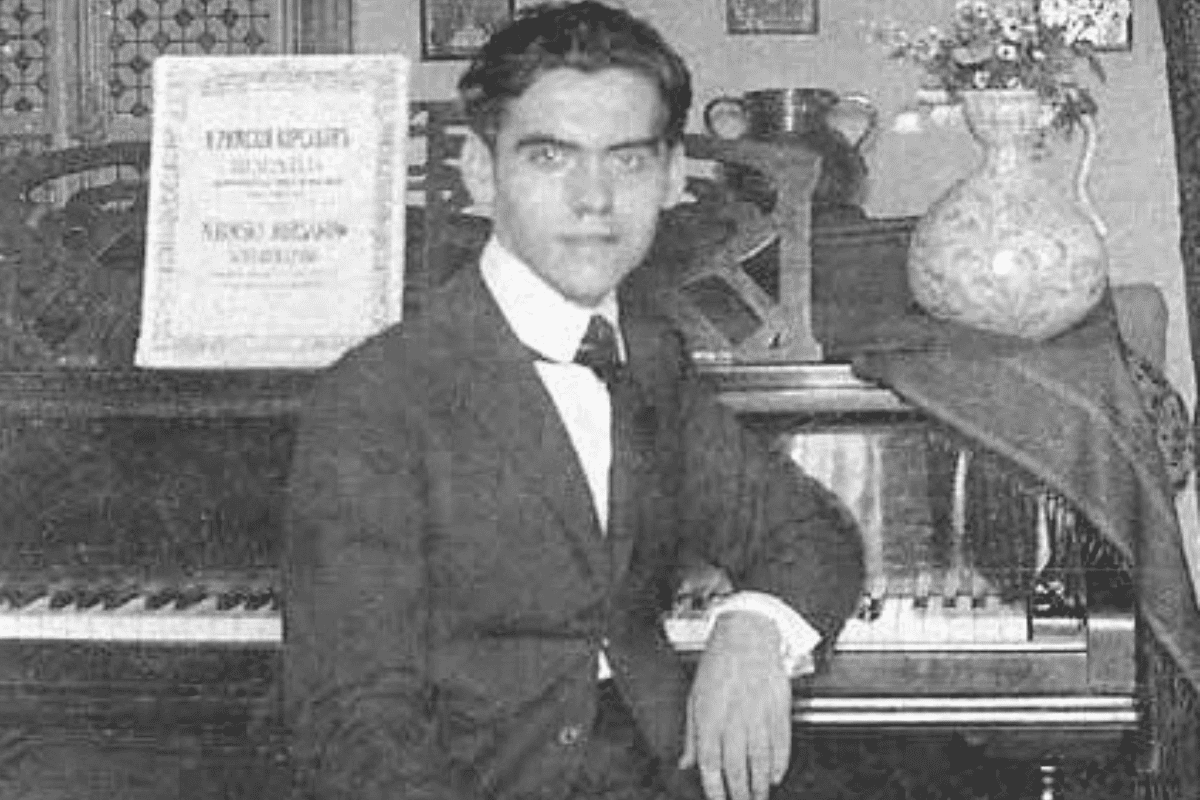
Federico García Lorca Collection – Public domain, via Wikimedia Commons.
They say that, to kill a poet, you have to kill him twice: first through physical death, and then by allowing his work to be forgotten. Today, Lorca is more alive than ever.
Would you like to discover more details and fascinating facts about ‘La bola negra’? Read the second part of this article.
(Header photo: Movistar Plus)
Author Info
