



‘La bola negra’: Spanish cinema, Lorca and the stories left untold
 12/11/2026
 By
Adrián Lago
‘La bola negra’ has made it into the top rankings of the most-watched films in Spain, and its success has reached audiences beyond Spanish borders. In our first article, we talked about its directors, Los Javis, the main characters in its three storylines and the figure of Federico García Lorca.
Now, let’s take a closer look at some fascinating details and interesting facts about the film everyone’s talking about (no spoilers!).
Fun facts and curiosities about ‘La bola negra’
Here are some interesting facts and behind-the-scenes stories about the film.
– ‘La bola negra’ is the most ambitious project to date by its directors, Javier Ambrossi and Javier Calvo. During filming, they went through a difficult time in their personal lives, as they decided to end their relationship after more than thirteen years together. Although they are no longer a couple in their personal lives, they continue to work together as an artistic duo.
– Filming was not always easy. During the snow scenes, a severe snowstorm hit Sierra Nevada. The entire crew had to endure freezing temperatures, and at times they even wondered whether filming could continue.
– In these snowy scenes, a woman appears talking to the character Carlos. In real life, she is Judeline, a well-known Spanish singer who also performs the song ‘Soldadito español’, a military march and pasodoble originally composed in 1927.
– The film marks the acting debuts of two of its cast members: Milo Quifes (Carlos) went to the film’s audition thinking they were looking for extras. After going through several rounds of auditions, he landed one of the leading roles. The other is Guitarricadelafuente (Sebastián), a musician who had never acted before. Both performances are impressive.
– As well as learning how to act in front of the camera, Guitarricadelafuente also had to learn to play the trumpet to bring Sebastián’s character to life. He is also the performer of the film’s central song, ‘La nieve’.
– Two of the most recognisable faces in the film industry are actresses Penélope Cruz and Glenn Close. Both have declared themselves fans of Los Javis, and it was actually they who asked to be given roles in ‘La bola negra’.
– The scene in which Penélope’s character performs a musical number was filmed without telling the hundreds of extras who the actress would be. They thought they were watching a rehearsal when Penélope Cruz suddenly appeared. As a result, the audience’s reactions, excitement and expressions of surprise are completely genuine.
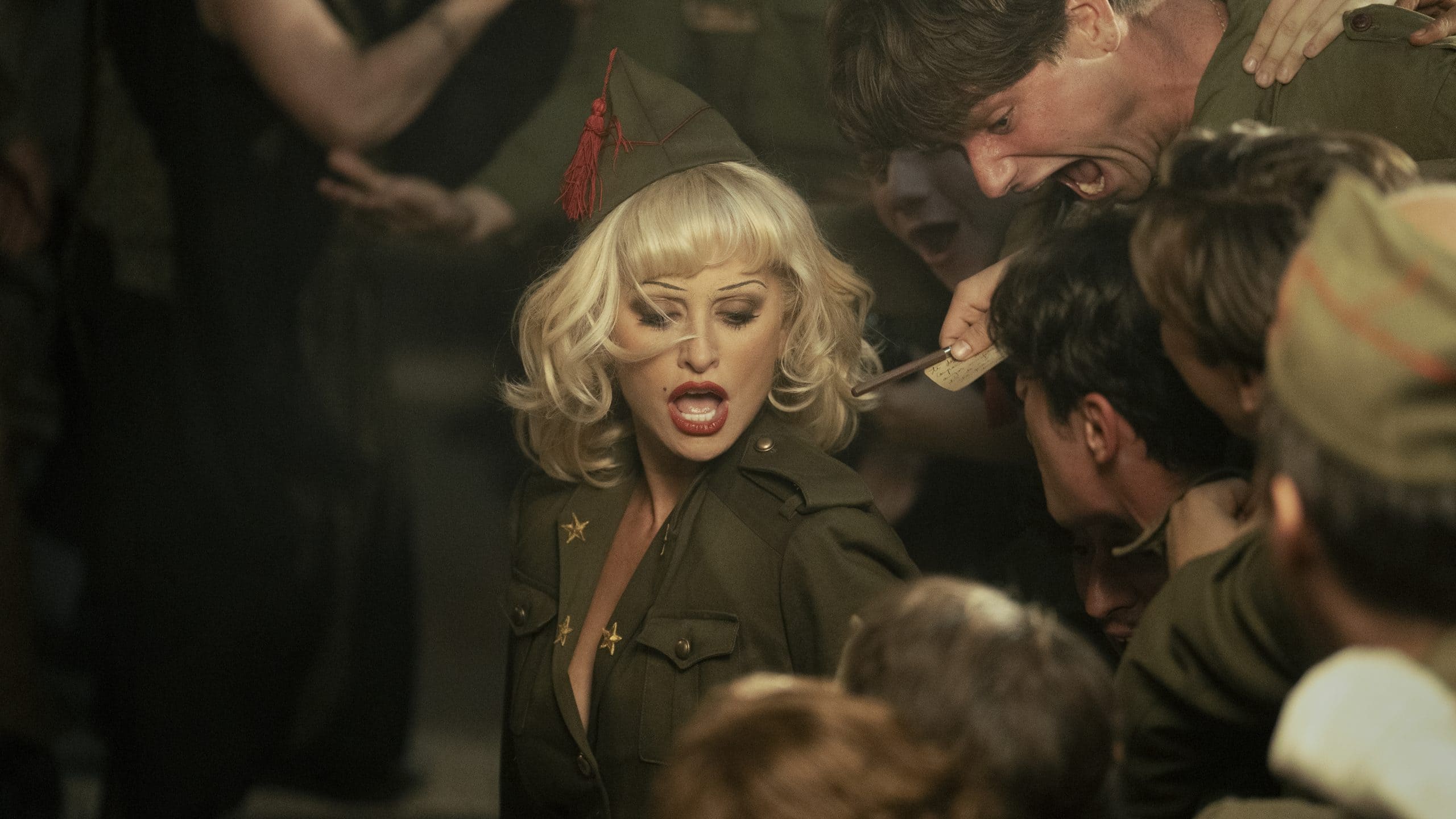
Penélope Cruz in ‘La bola negra’ – Movistar Plus
– As well as directing the film, Los Javis also wrote the screenplay. They were joined in this task by Alberto Conejero, author of the play ‘La piedra oscura’, which inspired ‘La bola negra’.
– Many scenes in the film are rich in symbolism, drawing on Lorca’s artistic universe and the work of other artists. One of the most distinctive scenes features sailors in Granada. Some of these images were inspired by paintings by the Greek artist Yannis Tsarouchis.
Recommended reading
One of the most special things about ‘La bola negra’ is that its success has introduced Federico García Lorca to a new generation of young people and audiences around the world. Many viewers are now keen to discover more about his work and read books related to his life. Here are some interesting titles connected to the poet.
La piedra oscura (Alberto Conejero): This play by Alberto Conejero is the starting point for ‘La bola negra’ and provides the inspiration for one of the film’s storylines. Although it takes certain fictional liberties, Conejero introduces us to the life of Rafael Rodríguez Rapún, secretary of the theatre company La Barraca and one of Lorca’s lovers.
Sonetos del amor oscuro (Federico García Lorca): A collection of ten sonnets written by Lorca during the final years of his life, possibly addressed to Rafael Rodríguez Rapún. One of the poems in this collection features in the film: ‘El amor duerme en el pecho del poeta’:
Tú nunca entenderás lo que te quiero
porque duermes en mí y estás dormido.
Yo te oculto llorando, perseguido
por una voz de penetrante acero.
Norma que agita igual carne y lucero
traspasa ya mi pecho dolorido
y las turbias palabras han mordido
las alas de tu espíritu severo.
Grupo de gente salta en los jardines
esperando tu cuerpo y mi agonía
en caballos de luz y verdes crines.
Pero sigue durmiendo, vida mía.
¡Oye mi sangre rota en los violines!
¡Mira que nos acechan todavía!
Other notable works by Lorca include ‘Romancero gitano’, ‘Poeta en Nueva York’ and ‘La casa de Bernarda Alba’.
Ian Gibson: An Irish-born historian who became a Spanish citizen, Ian Gibson is perhaps one of the leading experts on Federico García Lorca and the Spanish Civil War. Among his many books are ‘Vida y muerte de Federico García Lorca’, ‘El asesinato de Lorca’, ‘Vida, pasión y muerte de Federico García Lorca’, ‘El hombre que delató a García Lorca’ and ‘Lorca y el mundo gay’. Gibson has also studied other Spanish writers and artists, including Salvador Dalí, Luis Buñuel and Antonio Machado. In ‘La bola negra’, Glenn Close’s role is a tribute to this historian.
Finally, we’d like to share a short vocabulary guide to ‘La bola negra’, featuring some of the film’s most important symbols and concepts. We recommend watching the film to discover more about Lorca, Spanish history and the stories that were never told.
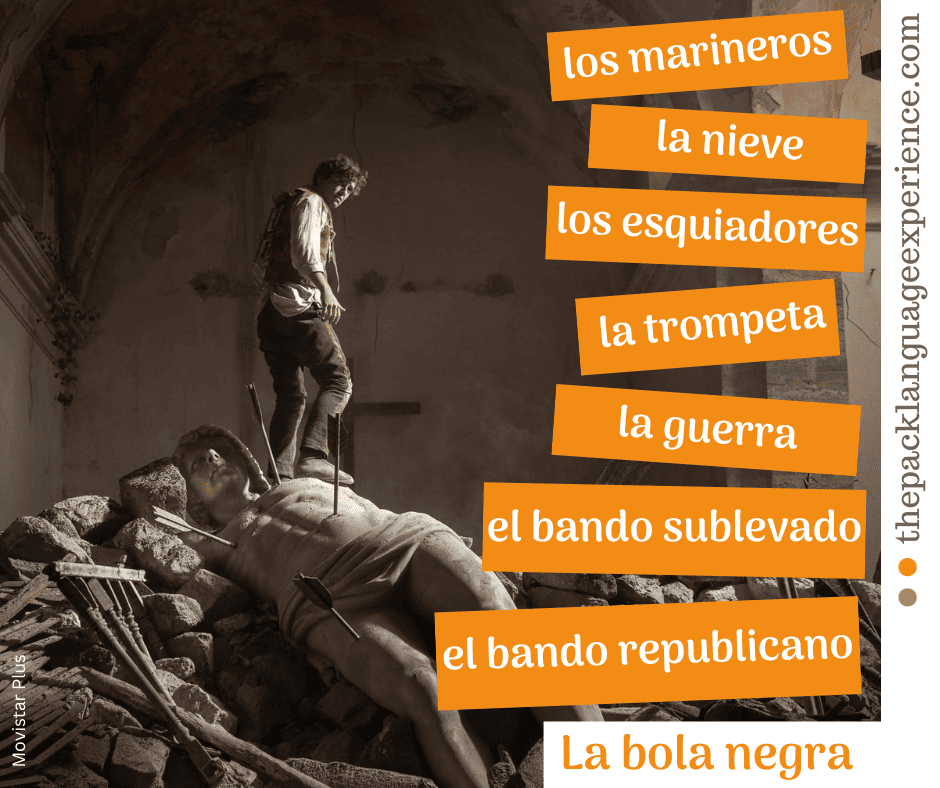
Would you like to discover more about Spanish culture and practise your Spanish? Join one of our Spanish language immersion trips!
(Header photo: Movistar Plus)
Author Info
