








Learn about pronominal verbs in Spanish
 23/09/2024
 By
Adrián Lago
By
Adrián Lago
In Spanish, there are verbs that are accompanied by a pronoun (me, te, se, nos, os, se). These verbs are known as pronominal verbs. Within this category, we can find several subcategories:
– Reflexive verbs: These are verbs in which the action is performed by the subject and affects the subject themselves (ducharse, peinarse, maquillarse).
– Reciprocal verbs: These express a mutual action between two or more subjects (abrazarse, casarse).
– Pronominal verbs in the strict sense: These are verbs that obligatorily require a pronoun (arrepentirse, avergonzarse, quejarse).
– Change-of-state verbs: These require a pronoun and usually express a change or transformation, as we saw in another post (hacerse, volverse, convertirse).
– Verbs that exist both with and without a pronoun, but with a different meaning: To help you learn these verbs, we have created the following infographic to help you distinguish the meaning of each verb depending on whether or not it is used with a pronoun.
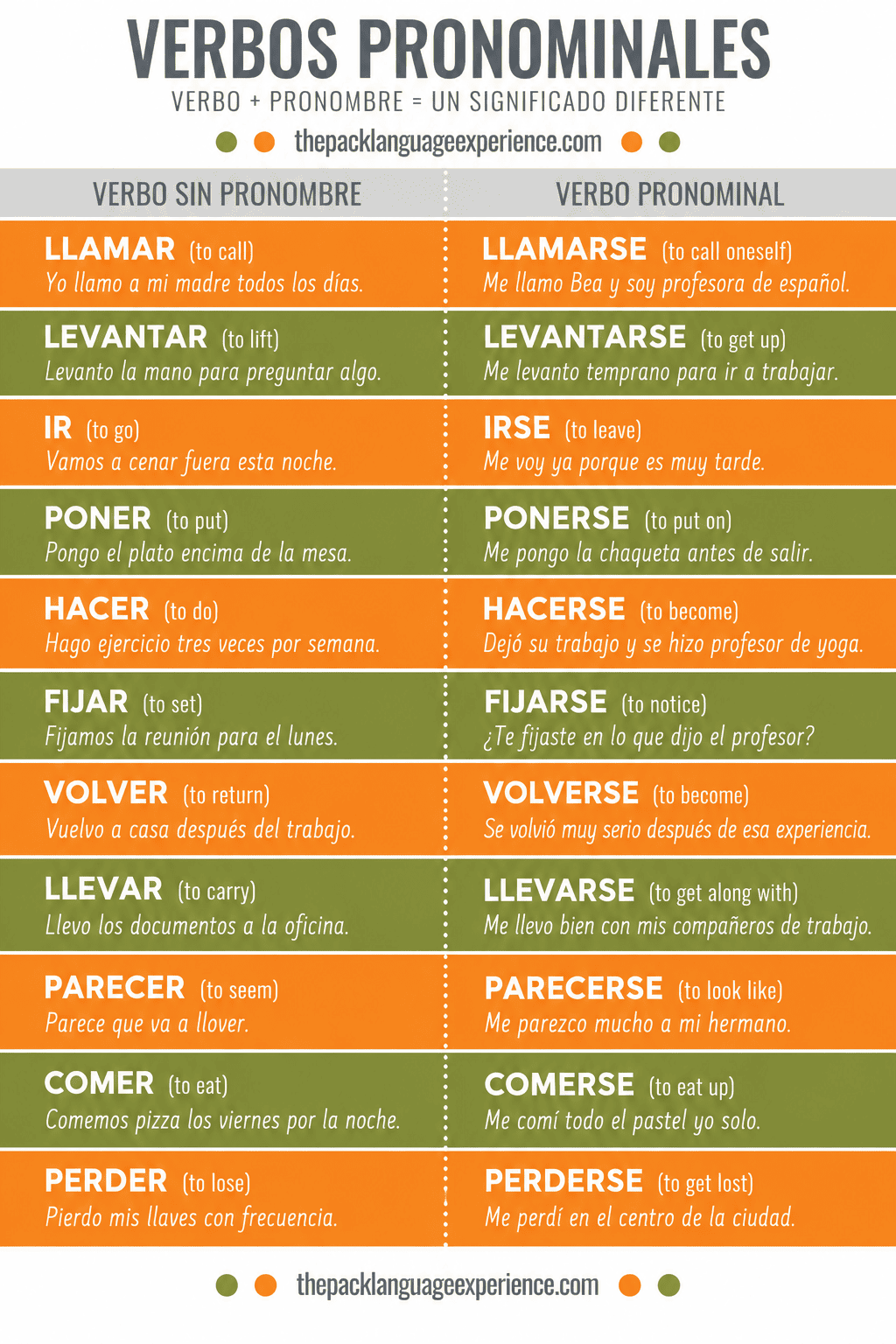
Did you find this table useful? You can also check out our other grammar posts, such as adjectives that change meaning depending on whether they are used with ser or estar or false friends. And if you want to put everything you have learned into practice, join our Spanish language immersion trips!
(Header photo: OpenAI)
Author Info
